Showing posts with label actions. Show all posts

Saturday, October 23, 2010

Small Things

"Do not think that love in order to be genuine
has to be extraordinary.
What we need is to love without getting tired.
Be faithful in small things because it is in them that your strength lies."
(Mother Teresa)

Small things....like threads in an intricate and perfect web - a thousand tiny lifelines that keep one's heart intact at just the right moment... 

Small things...like whispering joy that rustles across the pavement below your open window - late autumn leaves dancing one last time before the rain falls...

Small things...like beads on a string, slipping easily into place - tiny yet essential to the whole....

Small things, small prayers, small dreams...
the power of one - multiplied by faith and love.


Tuesday, October 5, 2010

Knowing, Understanding, Accepting, Allowing


"A friend is one that knows you as you are, 


understands where you have been,


accepts what you have become, 


and still, gently allows you to grow." 


— William Shakespeare

Sunday, June 27, 2010

The Territories of Joy and Sorrow


How does one who lives a wild and untamed life keep the inevitable sadness that goes with such a life at bay? Because, it's true. To live in the fullness of a passionate life that is creative, intentional, in motion and ever-changing, one must be prepared for unexpected risks into the deepest territories of both joy and sorrow. The joy...well, most of us risk-takers know exactly what to do with joy. But the sorrow can be a bit trickier to manage. Either way -  learning to completely embrace either state of being is not for the faint of heart.

T.H. White wrote, in a conversation between Merlin and Arthur in the novel The Once and Future King a bit of wisdom that helps me when I find myself disoriented by fear of the unknown, or despair over the state of the world, or the simple but profoundly intense experience of missing someone I love.

"The best thing for being sad," replied Merlin, beginning to puff and blow, "is to learn something. That's the only thing that never fails. You may grow old and trembling in your anatomies, you may lie awake at night listening to the disorder of your veins, you may miss your only love, you may see the world about you devastated by evil lunatics, or know your honour trampled in the sewers of baser minds. There is only one thing for it then — to learn. Learn why the world wags and what wags it. That is the only thing which the mind can never exhaust, never alienate, never be tortured by, never fear or distrust, and never dream of regretting. Learning is the only thing for you. Look what a lot of things there are to learn.

My current "to learn" list looks something like this:
  • a new language
  • the fiddle
  • more patience and trust
  • all the new web-building programs that my boss has asked me to digest
  • how to streamline my practical tools (camera, computer, phone). Whew!
  • more kindness
  • more surrender
  • more faith - that all will be well
  • and maybe a wee bit of step dancing...because, when I'm truly sad, dancing is a temporary and wonderful remedy.
So that seems like plenty for now. It may not abolish the sadness completely, but it will - at least - keep my wild and untamed fire burning while I wait to turn the next corner into the realm of joy!


Tuesday, May 18, 2010

Feeling First

The only time I have ever heard someone say “I don’t make you feel that, you choose to feel that way” has been when the speaker was defending themselves, or trying to let him or herself off the hook for words or behaviors that created an outcome that was uncomfortable for them. In other words, they used it as an excuse and a foil rather than accepting responsibility for their part in a situation that evoked emotion.

Human beings, especially those who are in touch with their feelings in a mature and healthy way, tend to respond to outside forces and situations with their emotions first, and their minds and intellectual reasoning step in soon thereafter. Those who, for a myriad of reasons, are very private or guarded in their reactions, can often adeptly go from step A (feelings) to step B (thoughts) in seconds. Note the distinction: “mature and healthy.” I don’t consider someone who flies into a rage or into hysterics at the drop of a pin to fit this description.

When my son was initially diagnosed with cancer, I supposed I could’ve “chosen to feel” something other than shock and grief, but in my human condition, I went directly to the place that any mother who loves her child would go. It was through time, necessity and giving myself opportunity to process some fairly raw emotions in safe and supported ways - that I stepped into the second phase of both the emotional and cognitive journey.  His process has been different, of course - influenced by age, life experience and his uncanny ability to stay in the now. I think that life threatening illness or loss are extreme examples here, because when we grieve it takes longer to go from initial reactions to consciously “choosing how to feel.”

On a day to day level; however, there are many instances. When your playful cat does something silly and you laugh at his antics, you don’t stop - make a carefully thought out choice - and then “feel joy.” You simply feel joy. Now. It’s a beautiful and spontaneous synergy. When you are listening to exquisite music and the sound and vibration of inspiration, tone, rhythm and harmonies evoke deep sadness and tears, you don’t pause - considered your emotional options - and then select “weep.” You just surrender. Now.

I could offer example upon example of situations and experiences where perfectly intelligent and sensible people DO NOT stop to hold a consult in their mind, rather they allow themselves to fully FEEL FIRST. And thank god that we can do such a thing. Thank god that we can trust the deep knowing of our hearts on occasion as it is with our hearts that we can often see and understand most clearly.

So here’s the deal: What we have DO HAVE A CHOICE IN -- is determining how - after we’ve felt the laughter, cried the tears, burned through the fury or known the heart ache  - how and who we will BE NEXT.

If you’ve been one of those folks who likes to say “Oh, you’re choosing to feel that way.” I would strongly urge you to stop saying this. Stop sidestepping the reality of the human spirit, for to feel is to know that you are alive! Stop placating your own fears by shutting out emotions, and stop disrespecting the heartfelt (not “mind” felt) spontaneous joys and sorrows experienced by others.

No matter how messy or weird or too real it may appear to the nay sayers, those who know the emotional landscape of their inner selves also know that if they allow their feelings to surface, they can then begin choosing what comes next in a nourishing way. For me these are the choices that matter so very much and may actually make me a better person. This writer’s now-open heart, despite my mind’s desperate attempts to make it choose occasionally less messy responses, has the first and last say.


Friday, May 14, 2010

"North Star"

“Make your plans. Make them now,”
urges the light filtering through the curtains.
“Move honey, just move,”
calls out the road map from the trunk of the car.
“What are you waiting for?”
Asks the able-bodied adventurer in my heart,
shaking her head with impatience
from waiting - 
too long, 
pack ready,
to move forward on the trail.
See that compass?
See the sun moving across the sky?
Another day is passing.
Another moonrise is certain.
Which vista will be your viewpoint?
Are you paying attention, my beloved?
Will you see from inside the same room
and through the same window?
Or will you step outside?
Will you
let Polaris be your marker?
It’s time to open the front door and walk away.
Go deep into the woods and 
find the path though the underbrush;
roam the edge
of the desert,
turn away from the sign posts reading “Wait
Until Tomorrow,”
cross the ocean
and make passage along roads 
so well-seasoned by memories
and movement 
that ghosts of ancient travelers 
watch over you in sleep
and never let you lose your waking way.
“Take yourself by the hand,” whispers my soul,
“Don’t wait, don’t wait,
dear god....
don’t wait.
Just seize your heart -
and go.”


"North Star" © 2010 and beyond by Martha Lee Phelps


Wednesday, May 5, 2010

Khaki-colored Halo

I was lying by the pool at the Furnace Creek Ranch in Death Valley, California. The dry heat felt wonderful against my skin and combined with the the lazy conversations unfolding around me, I was being lulled to sleep.  Sound snippets of children laughing in the water, mothers calling out and friends engaged in small talk floated past me. I heard a deep baritone voice behind me inquisitively address someone in my vicinity, “I see that you are journaling. Is that something you do daily, or is it an exercise for this trip?” “Well,” came the response from my left, “if you assure me that you’ll keep this to yourself, I’ll tell you.” 

‘Hmmm, secret journals?’ I pondered with eyes closed. I pulled my consciousness forward and slightly turned my head to squint at the second speaker. The journaler was sitting in the shade of the pool deck veranda.”You see, Diane goes away for three weeks each summer to a work conference,” he began, (I’m thinking about who Diane might be - his wife? Co-worker? Friend?) “and she misses the kids and I terribly each year when she goes. She can hardly sleep at night. Last year, I had the kids writing her letters constantly, which I sent off every other day.”  

I felt myself smile at the image of kids bent over lined paper writing sweet kid-like descriptions of summer activities, and I inwardly nodded with approval at how I imagined it would feel to receive such a letter from a child of my own. 

     “Well, I found this old journal of hers that was empty, and I thought that this year I would take time to write in the journal every day until she has to leave, and then I’ll slip it into her suitcase before she goes -- so that when she unpacks, she’ll be surprised by it, and - you know - have something to read from home.”
    “How nice of you, “ observed the friend who had climbed out of the pool by this point and was drying off with a towel as he listened to journal-man’s story.
    “It’s just bits and pieces about the kids and their adventures, stories about special times I remember, and of course - some sharing about my feelings for her. Just that sort of thing.”

By now I had turned my entire head and was using my hat as a sunshade. I gazed at this unusual man. Now, I wanted to look at this person. I wanted to see with my own eyes, what outward appearance is worn by someone who clearly has such a large, tender and giving heart?

Nope. There were no outer visible signs on this average looking, slightly overweight middle-aged man wearing a navy-blue short-sleeved shirt and crumpled khaki trousers. There was no special birthmark, tattoo or unusual tribal marking. There was no halo or sign inscribed with the words: “I pay attention to my beloved. I care when she is lonely. I practice compassion. I observe the small but beautiful acts of daily life in my family and make note. I am willing to give of my time, care, creativity and present moment for the benefit of others - especially those whom I love.”

    “Wow,” I said under my breath and turned my face back toward the sky. On my right, my daughter heard my single word. Something about the short exclamation made her look up from the book she was reading,  “What?” she pondered. So I quietly described the conversation I had just overheard.

As I explained this man’s journal to my daughter, I felt a welling of emotion. Whereas the details of his life story were minimal, who he was inherently was largely apparent and very impressive. He was a good man and a loving person. The situation reminded me of times I’d read literary passages to students and asked them to tell me what they’d learned about the main characters based - not on their physical descriptions - but on the character’s very actions and dialogue.

What do our actions reveal about us? What, among the day to day exchanges that we have, might be considered “small” on the surface, but are actually very big? What little things do you do that can ease another’s heart? Which simple acts demonstrate steady and reliable devotion and kindness?  What secret journal are you keeping that whispers “I love you” in it’s quiet reflections and might forever change a reader’s life?

Wednesday, April 28, 2010

A Lifetime Love Affair (Part I)

Okay. Fair warning dear blog readers. This is a long post. It's so long, in fact, that I'm splitting into three parts. It's essentially about expression of self, but it's also a story that I realized I wanted to give my kids. Partly so they can understand their mom, and partly to encourage them to pay attention to the things in life that feed their souls. So....read on, or tune in next week for a change in topic! ~ mlp

Dear Sarah,

We had a pretty good row this morning about...well,many things I suppose. It was about socially acceptable behavior and who defines what’s right and wrong, it was about judgment of others and ourselves, it was about boundaries and it was about taking a stand for what you believe in. That’s a lot of big stuff to cover in just a few minutes at a fairly heated level of exchange, and I hope we can revisit all of it in a more leisurely peaceful fashion in the near future.

But for now, my darling, I want to talk to you about what started the argument: poetry. I offered you an e e cummings poem to take into English class, where you are currently studying poetry and cummings, and you blanched about taking the poem to your teacher. I then, got more than a little upset with you and the rest is - as they say - history. In fact though, the rest is the story about a lifetime love affair with poetry and how pursuing what you love, will change you forever.

I first declared that I wanted to be a poet “someday” in the fourth grade. A local poet by the name of David Zaslow, came to Lincoln Elementary School to teach us how to "be a poet." His opening reading was the William Carlos Williams’ piece, “This Is Just To Say” 

I have eaten
the plums
that were in
the icebox

and which
you were probably
saving
for breakfast

Forgive me
they were delicious
so sweet
and so cold.

I was mesmerized. David went on to teach us about metaphor and simile, about onomatopoeia and alliteration. He coaxed haiku and small rhyming bits from us, and read aloud from a collection entitled “Reflections on a Gift of Watermelon Pickle” that held 114 treasures about topics ranging from hunting to loneliness, old dogs sunning themselves to biscuits, arithmetic to baseball games. In short, wonderful snippets and stories bound into a few graceful lines - about anything and everything in life. I learned that no topic was off limits, a few key words could speak volumes, and a truly good poem would reach into your gut and momentarily take your breath away.

Mr. Cummings (or shall I say "mister cummings") showed up in my life a couple years later, when I was given a wonderful introduction at about aged twelve by Joe Dubay, a dear family friend. Joe pulled a volume off a shelf in my parent’s house, and asked me if I ever read poetry? I said yes, but confessed that “that guy’s stuff was hard for me to figure out.” Four readings later - together and out loud - and I was hooked. The poem was  “in Just”

in Just-
spring    when the world is mud-
luscious the little
lame balloonman

whistles    far    and wee

and eddieandbill come
running from marble and
piracies and it’s
spring

when the world is puddle-wondeful

the queer
old balloonman whistles
far    and    wee
and bettyandisbel come dancing

from hopscotch and jump-rope and

it’s
spring
and
    the

        goat-footed

balloonman    whistles
far
and
wee

We also had a long discussion about the license that cummings took with his punctuation and suddenly, everything I knew about conventionality and creativity changed. I began to surmise that to be completely daring - one must be comfortable with putting down the manuals and rule books, step off the edge of the writer's cliff and never look back.

At fourteen, with the help of my very hip ninth grade English teacher, Terry Wells,  I fell in love with the lyrics of Paul Simon:

“Time it was and what a time it was,
A time of innocence,
A time of confidences,
Long ago it must be,
I have a photograph,
Preserve your memories,
There all that's left you...”  (from Old Friends)

and declared that despite that fact that Simon was disguised as a musician, he was actually one of the greatest poets I’d ever encountered. And as I merged into the fast lane of adolescence, I began regularly writing my own poems which were, by the way, very very bad. They were full of teen aged angst and sorrow and filled with yearnings for true love and devotion; in a nutshell, they were schlock.

It was in high school that things turned a little sour. For the first time, I encountered teachers teaching poetry who didn’t understand it, didn’t like it and definitely didn’t want to teach it. You see,  Americans, in general, are uncomfortable with poetry. Because of the poetry education that adults once had, or lack thereof, they've been left with the sense that poetry is a subject rather than an art, an experience, or a source of pleasure. However, since I hadn’t drunk the Kool Aid, I was unlike my teachers and classmates who abhorred the required annual poetry unit. My writing continued, and I learned to quietly curb my enthusiasm until my senior year. 

That year, named one of the Oregon’s top young poets through a state contest, I was awarded the honor of spending a full week studying with three very distinguished Northwest writers. More importantly though, I was offered the perspective-changing experience of sharing time with a dozen other kids from around the state who loved writing as much as me. And trust me when I assure you, we weren't a bunch of horn-rimmed, pocket protector geeks. Writers are crazy, imaginative, spontaneous people - at any age, they are passionate about life,  know how to have fun and are fairly fearless when it comes to expressing themselves!

The poet and essayist among those writers, was Kim Stafford (son of poet laureate, the late William Stafford) who further nurtured in me the idea that poems could be found everywhere and in any topic. Whole themes could arise from a single phrase or word overheard on a city bus, read on a billboard or awakening one in the middle of the night. Kim advocated for carrying a notebook to jot ideas, and whether he learned it from his father I don’t know, but like Stafford senior, he was adamant that writing daily was as essential as breathing for a poet. Then, and now, his convictions about writers are strong, “Writers have a place in this essential work -- to question, listen, and tell the connecting stories of human experience, the quiet voices of local life everywhere.”

Soon after, I started university and turned eighteen. If it hadn't happened significantly enough by then, that was the year my dear Sarah, that the work and words of one poet in particular changed my life.

(End of Part I)

Tuesday, April 27, 2010

"A case for tone deaf-two left footed-blocked writers."

When we’re children we all see ourselves as artists.

We see ourselves very clearly as artists until well intentioned and generally loving and chronologically older people socialize us in other directions.

So, when we were kids we actually knew without much question that yes, we were painters, dancers, music makers, storytellers, sculptors, actors and poets. The world was our canvas, and our imaginations and usually very few outside objects were our palates, tools, musical scores and scripts.

We didn’t differentiate being an artist from being ourselves. (By the way, we were also scientists, architects, doctors, athletes, teachers, explorers and any other number of types of “people” we could conceive of in our minds and hearts.)

Somewhere between the state of wonder  and the region of adulthood, our perceptions of ourselves underwent some fairly radical redefinitions. Along with those redefinitions there were heaping doses of judgment mixed in: “This drawing is good.”   “That dance was so-so.” “The song sounds like it needs a little more practice.”  “You’ve got ‘real’ talent.” “Hey look, you got an A” and so forth. It became difficult to continue seeing oneself as much of a creative being when there was always a yardstick being held up by others and eventually, by oneself.

The end result is a rather backward evolution from being thriving artists to being: tone deaf- two left footed- stick figure drawing-blocked writers. Picasso nailed it when he observed, “Every child is an artist, the problem is how to remain an artist once he grows up.”

A giant part of how we grow and learn is tied very tightly with the fundamental need to creatively realize ourselves in the world. It’s vital to give kids opportunities to express themselves in a wide variety of ways and chances to deepen existing relationships with different artistic modes. By giving a child the opportunity for a “WOW” experience in the arts, she might be emboldened to see herself as an artist straight through childhood and into adulthood. He's more likely too, to use that part of his personality to strengthen whatever he has decided to do in the world. 

For those of us who've already crossed into grown up land and have realized that we may have left a crucial part of ourselves behind, we need to remember that not only is it not too late to reclaim our artist-selves - but it may very well be the key to keeping our hearts intact for the long journey of life. It’s as much about choice and attitude as it is actual activity, and it has nothing to do with other people’s assessments. Remember the first line of this post? It’s how you see yourself.

I can look everyone of my close friends in the eye and tell them the ways that I believe they are artists. (Some of them might be a bit shocked!) But who cares what I think, what can you see in yourself?

"Everything we do is art and can be an act of artful living - if we so choose. Writing, drawing, baking, dancing, relationships, work, parenting, even just siting still - especially just sitting still, are all forms of artistry."   m.l.p.

Thursday, April 22, 2010

Careful Out There!


One of my all-time favorite photos courtesy of the very talented Jim Schlight

Did you know that April is “Children and Nature Awareness Month”? I didn’t. In my world, and in my children’s world - every month is Children and Nature Awareness Month. I realize, however; that we are a rare breed of family these days.

As a mother, teacher, artist and poet  I have very strong feelings about Nature and its roll in the lives of children. I strongly hold the opinion and belief that Nature is at the root (no pun intended) of creativity. Nature is grounding, healing, humbling, miraculous, inspiring, frightening, beautiful, vividly honest and a teacher. Nature is an equalizer. I feel that this all applies to ALL of us - of ALL ages.

It wasn’t so many decades ago in our country that when some children were released from school for the day (if they went to school), and they headed home to work on their family farm or, if they were of an age, some other part time afternoon job. If they did neither - they were loose and rambling. In cities, they rambled in and out of doors in a cityscape. In less populated areas, there were woods, fields and beaches to explore.

As anyone who  is paying attention or has kids today knows, the after school and summer vacation-time lives of American children has changed radically - definitely since I was a child forty-odd years ago - but even in the last ten years.  In our relatively small community alone (and granted, this is a fairly affluent community), there are programs galore. There are languages to study, toys beyond belief, waaaaayyy too much electronic stuff, music  (which is wonderful), lessons – lessons – lessons…sports, groups, clubs and so forth. If you look at the calendar hanging in the average Ashland kitchen that tracks the movements of our “average” American children, it truly is incredible. Hopefully, there is gratitude for all of these opportunities, and yet - I’m feeling a bit of melancholy as well.

I’ve a fond childhood memory is of sitting in the apple tree near our family home on Oregon Street. The tree grew in a vacant lot (now there’s a term infrequently used lately), and ones main objective was to get up as high into the branches as possible and eat the tart apples while throwing the wormy ones down the adjacent street. Picture it: the arching, spinning toss of a bright green apple against a pale blue afternoon sky and dangling bare legs and pavement dirty feet hardly visible through the leaves. Hear the laughter and cry of delight at the “Pop!” of the fruit striking the ground; the skin bursts and viridescent flecks go flying, white flesh and seeds explode and scatter across the dark asphalt. Breathe in the too sweet fermenting aroma of windfalls which are composting slowly in the leaves and dirt below, and grin with delight at the mischief and poetry of this simple pastime…sitting in an apple tree.

We have to wonder, in our present busy lives, how many children have spent even ten minutes in an apple tree, much less picked their own tart Granny Smith from a heavy branch? How many backlot spy games will transpire this afternoon? Walks down spring rain dampened dirt paths?  Contests among friends in an open field without a whistle or a score keeper or a clock - where the rules evolve as the sport unfolds and officiating occurs by consensus and fair play?

How many of our children know how to hang out in Nature? How many of YOU know how to hang out in Nature?

It’s really not that complicated and definitely no big deal. You do not have to go camping or hike some steep mountain. Just step outside a few extra yards today. Leave your agenda (and your iphone) behind. Whether the place in nature is a window box, a back yard, an apple tree or the deep woods – when Nature and humans are brought together peacefully – there is positive alchemy that feeds imagination, curiosity, intelligence, relationship with self - and thereby others, and one’s very soul.

Careful out there. If you do it everyday, in some small way, even for just a moment or two - you will change. For the better.

To explore the very real phenomenon of Nature Deficit Disorder, check out the incredible work of Richard Louv, author of Last Child In The Woods.

To read up on how other communities are pursuing No Child Left Inside, start here with a fantastic article from Orion magazine.

To change your mind and your heart, the only link to click is the off button on this box. Try it for a bit, and take a walk in your neighborhood.

Wednesday, April 7, 2010

Supporting Folks We Believe In

Body Basics 1

One of the most enjoyable aspects of design arts projects in the studio is getting to help spread information about people whose work I believe in.
Take Karen O’Dougherty, for example. Karen taught for a decade at Lincoln Elementary School in Ashland, Oregon where - among many things - she created a powerful “body changes awareness” program as a part of her 5th grade curriculum. After leaving the public school classroom to raise her three daughters, Karen was encouraged by parents of former students who had younger kids, to begin teaching and sharing the program again to interested youth and families. Body Basics I was then developed in the form of private group lessons and has been empowering girls throughout Southern Oregon since 1998.
My two elder kids (one male and one female) attended Body Basics classes during their eleventh years and learned to safely and openly discuss issues of puberty and sexuality as well as gained clearer insights into who they were then as developing  individuals and amongst peers. I look forward to my youngest daughter being among Karen’s students sometime this next year, as Body Basics has become one of our families’ educational rites of passage.
When Karen recently asked me to develop some flyers for local distribution, I was eager for the project. The flyers, one aimed at preteens and the other for teenagers, came together intuitively with images that worked well. This is a bit of the magic that happens when working on something I believe in, like the Body Basics Program.

If you'd like to see fuller format versions, check the Design Portfolio on the studio's website.
Body  Basics 2

Tuesday, March 30, 2010

Extending Life's Radius


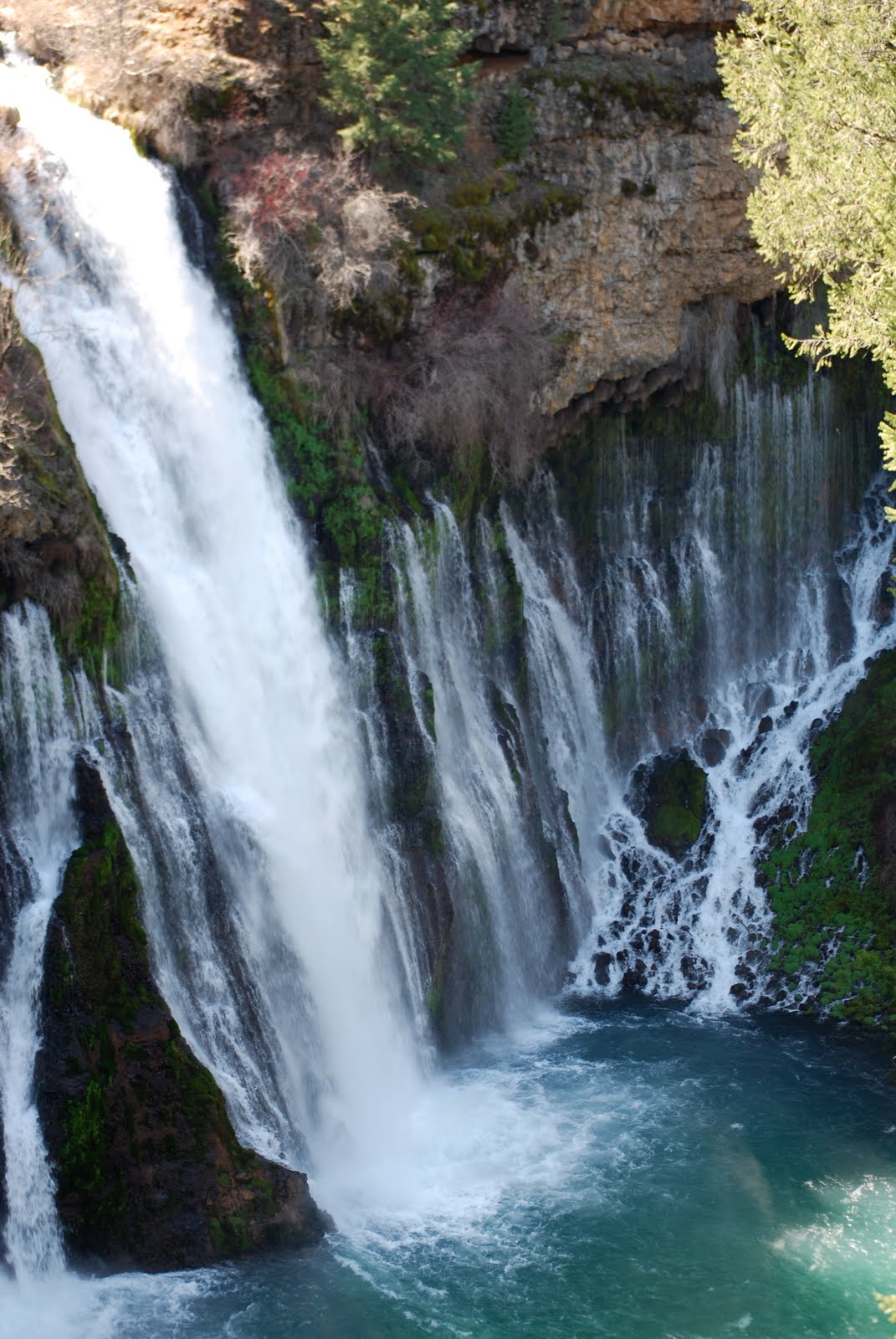
 Mt. Shasta - a mere 76 miles from home - taken from Hwy 89 vantage

I heard somewhere that it’s not unusual for “most” people in the world to be born, live and die within a twenty mile radius. This is easy to imagine, when I consider the lives of folks living in developing countries, but it’s damn near impossible to fathom when I look through the rose-colored lenses of my middle class American educated upbringing in comfortable Ashland, Oregon. Nevertheless, the girls and I pondered this “leaving one’s known twenty mile turf” theory while our odometer logged in more and more miles in the opposite direction of home. We were readily able to acknowledge that our act of packing up and making a 1500 mile trip would be considered a very large departure of the norm for many folks.

Perhaps that was part of the reason our trip was such a stretch for me; I was actively choosing to drive away from a safety net I have had anchored in place since I was about ten years old. See, I was the kid who wouldn’t accept a sleepover invitation unless it was close enough to home that I could easily walk home (or be picked up by a sleepy parent ) at 12:30 A.M. That was about the hour I would invariably realize that I was SO wickedly homesick, so painfully anxiety-ridden with fear of being away - that,  with knees literally knocking together, I'd make the walk of shame to the parent’s of whichever friend had invited me over and ask permission to call home.

Mind you, after playing out that particular scenario two or three times in elementary school, it ceased to continue with regularity because I became a skilled practitioner of avoidance and was adept at politely refusing most invitations to slumber parties, Friday night sleepovers and summer weekend camp outs. In middle school, when the social ladder is as much a part of one’s overnight luggage as a comfy pillow, it was often a very tough call between accepting an invitation (and perhaps spending a night in overwrought tension) or declining (and being left out of essential adolescent  exploits to be shared among peers on Monday morning by the lockers). Sometimes I would momentarily forget my angst - in the excitement and thrall of potential adventures, and I would say “yes” to a generous friend who wanted my company. Then, I would remember my looming apprehensions at the last moment and crumble in complete humiliation - disappointing tenfold whomever my pal was with a phone call to say, “Sorry; I can’t make it after all.”

By the time I was fourteen, my parents were ready to disown me due to what they considered irrational behavior. It wasn’t irrational to me though, nor was it complicated. I didn’t particularly need THEM to be at home; in fact, they could travel away all they wanted, as long as they left me there  - safe and snug. About the time that they began to surrender to the idea that I would live in Ashland forever and never trot the globe, I began to conquer some of said homesickness by the company I kept, and made my first successful trip away with my high school sweetheart and his parents at fifteen, and the rest is - as they say - history. Sort of.

Diagnosis-wise, I’m fairly certain my symptoms were anxiety attacks, not exactly your run-of-the-mill childhood homesickness, but truly scary events. Do I still experience that knee-shaking, belly quaking fear from time to time? I guess the fact that I have traveled happily and successfully for the past three decades is some sort of “Proof of Ability,” but the honest answer is: Yes. Absolutely. (And I’ve learned to get over it.)

The first two nights spent with my son in the oncology unit at Oregon Health Science University gripped me like I’ve never been gripped, and since Reid’s cancer diagnosis, I have become reacquainted with fearful feelings I haven’t felt since adolescence.

So this first trip out and away since leukemia moved into our family, this first time away from Reid since he got sick, THIS was a big departure from the “new norm” of our life. All the way to Death Valley, California I asked myself, “Is fear of FEAR big enough to hold me back anymore? Do I decline otherwise new journeys because I’m afraid of being sick to my stomach with terror in the middle of the night? After having come all this way - after having left behind all that we once believed was comfortable and familiar, is worry big enough to keep us from venturing out, kids in tow to see, share and discover this amazing planet?”

I know it will be a damned tough call at times. Sometimes, like this past week, I will have to dig very, very deeply into my heart, remind myself to breathe and resolutely plant one foot forward. Being able to set forth and journey - both literally and figuratively - was and is a privilege and a joyful act of life celebration. The learning opportunities outside our doorsteps have as much to do with what we experience while away - as how they impact our return and the changed, hopefully sweeter relationship we will bring back home. 

 McArthur-Burney Falls Memorial State Park, CA
127 miles from Ashland, OR

Friday, March 12, 2010

Contracts and (Re)negotiations

renegotiate |ˌrēnəˈgō sh ēˌāt|
verb [ trans. ]
negotiate (something) again in order to change the original agreed terms : the parties will renegotiate the price | [ intrans. ] she asked to renegotiate after signing the contract.


If memory serves, the attached note was composed by a seven year old Reid. One day at summer soccer camp pick up, the young YMCA director - with a firm hand gripping my son’s shoulder - approached me with a “concern.” My boy had not only been side-talking while coaches were instructing, but Reid had declared during a match that the officiating "sucked." Clearly this kid was a trouble-maker, and if he intended on returning to camp the next day, a letter of apology would be necessary. The terms were non-negotiable.

Sitting in the car together, Reid explained all of the reasons he was not at fault. He declared that, despite his obvious innocence, he would “write the stupid letter,” but only because he really wanted to keep playing soccer and not because he was admitting guilt.

As a still-novice mother at that point in time, I’m sure I was bugged by Reid’s seeming lack of willingness to accept responsibility for his actions. Now, I look back on the incident with amusement and appreciation for the way he “sucked up” (pardon my language, Coach) and re-negotiated within his own heart and mind so that he could stay in the game that he loved (and  continues to love) so much.

Sometimes, in order to get what we want - or serve the greater good - or make amends - or simply make a shift, we have to accept different terms and conditions. Every day - from business to personal, from political to spiritual, from children to adults - agreements change and new contracts are drafted. It’s maddening in many many ways (just ask any attorney), but it’s part of the human condition. Sometimes the easiest way to accept something that is non-negotiable, is to work a little inner renegotiating and healthy surrender.

This morning, my desire to stay in the game is so great, I am about to back down from the covenant I made with myself to blog continually for ninety weekdays in a row. Since I am the creator of my blogging contract, my own boss - so to speak, this renegotiation has not been a simple or necessarily peaceful process. I’m a tough boss to myself. In the end, I had to call out my inner mediator to successfully seal a new bargain between Martha, the writer and Martha, the hard-assed boss lady. True story.

The result of these new terms: I am taking the next two weeks off from public journaling to make a couple of geographic trips and hopefully, a multitude of creative intangible journeys. There’s essential business and play to attend with my kids and myself during this break, and I want to give each moment my undivided attention. I will return to this written account of my wild untamed life on purpose on Monday, March 29. Meanwhile, I’ll be out there living in it, and I invite you all to do the same!

All will be well ~ m.l.p.

Monday, March 8, 2010

Simple Monday Message


"BREAK THE RULES,

FORGIVE QUICKLY, 


KISS SLOWLY, LOVE TRULY

LAUGH UNCONTROLLABLY."
Anonymous 

Monday, February 8, 2010

No Proof Required

Happy Monday...and week leading up to Valentine's Day. Valentines may be a lot of hooey to some (probably not Hallmark Cards), but it does offer a great excuse, which I may take advantage of these next few days,  to write a bit about Love....

Conveying Love “is when you reveal yourself nakedly and honestly, at any given moment, for no other purpose than as a gift of what's alive in you. Not to blame, criticize, or punish. Just ‘Here I am, and here is what I would like.’ This is my vulnerability at this moment. To me, that is a way of manifesting love, “ says peace teacher Marshall Rosenberg.

On it’s veneer, one assumes that any expression of love is nonviolent, yet the Nonviolent Communication method (NVCM) created by Rosenberg suggests that simply saying the words “I love you” doesn’t necessarily create connection or harmony. In fact, “I love you”  is viewed as often a rote, and at its worst, manipulative phrase rather than an expression of true gratitude.

As in “To Do Or Not To Do” where I explored the verb-like qualities of responsibility and compassion, I agree with Rosenberg’s stance that Love isn’t merely a feeling. Love is an action, and a truly nonviolent expression of Love is something we manifest, something we do, something we have. It involves giving of ourselves in a certain way that is a truthful, caring and positively intended expression of what's alive in us in that moment.

So merely saying “I love you” can miss the mark - due to the senders’ intention (when the words are said in perfunctory fashion or they are expressed with expectations) or due to the receiver’s ears (wanting “proof” or attempting to assign some sort of measurement “how much do you love me?” rather than joyfully receiving it).

When Love is an action, it is a gift of your Self to an Other with no ulterior  purpose other than to reveal what's present or alive in your Self because of something that that Other did which made life more wonderful.

So, what might such an exchange of Love look like?

Years ago when I was a junior high school English teacher, I started each class by reading aloud. I believed that, even at the ripe old age of thirteen, kids deserved the nurturing act of being read to, especially since many never received this kind of attention at home. The practice was one of devotion toward my students, and I read with enthusiasm to rapt listeners.

One day, unbeknownst to me, a fellow teacher stood just outside the classroom door observing me perched on the reading stool and watching the engaged expressions of the young audience. Later, my friend came to me and said, “I want you to know that when I watch and listen to you reading to your students, you are beautiful to me. I am inspired by what's happening between your and your students, and it feels wonderful!”  

Wow! I had never heard - nor felt - the words “I love you” spoken more powerfully in my life. 

Over the years, when the infamous “three little words” have fallen short of some invisible emotional mark - due either to the speaker’s (lack of) intent or my own inability to receive, I’ve longingly recalled the profound heart connection I felt with my friend - not only that day, but ever after - for the gift they shared. They weren’t complimenting or praising my appearance or teaching style, they were acknowledging “I see you and feel your passion, and I like the way my heart feels as a result.” 

Rosenberg says that in order to joyfully give and receive, we need to make three things clear when we express love or gratitude: 1) What specific action I want to celebrate in you that made life more wonderful. 2) How I feel now as I recall this action. 3) What needs of mine were fulfilled.

Expression of Love in this fashion frees us from the burden of proving our feelings and requiring proof in return, removes the
emotional obligations in which we often tangle ourselves, and offers us opportunities to truthfully express how we are and what we need.

So here’s an early "Valentine" to my kids ~


Dear Reid, Gracie and Scout, When you reach out to me - inviting me to play; gently poking holes in my endless worries; eating countless experimental meals; patiently waiting “just one minute” for the tenth time; sharing your grand schemes, do-able dreams, biggest fears, quirky stories and silly jokes; revealing when you don’t understand and shining out when you do; looking me in the eye and speaking your truths -- I am awed and honored by your generosity. You teach me every day to never stop reaching out to others, to keep reaching in to the heart and to remember to reach up in faith.

How will you manifest Love today?